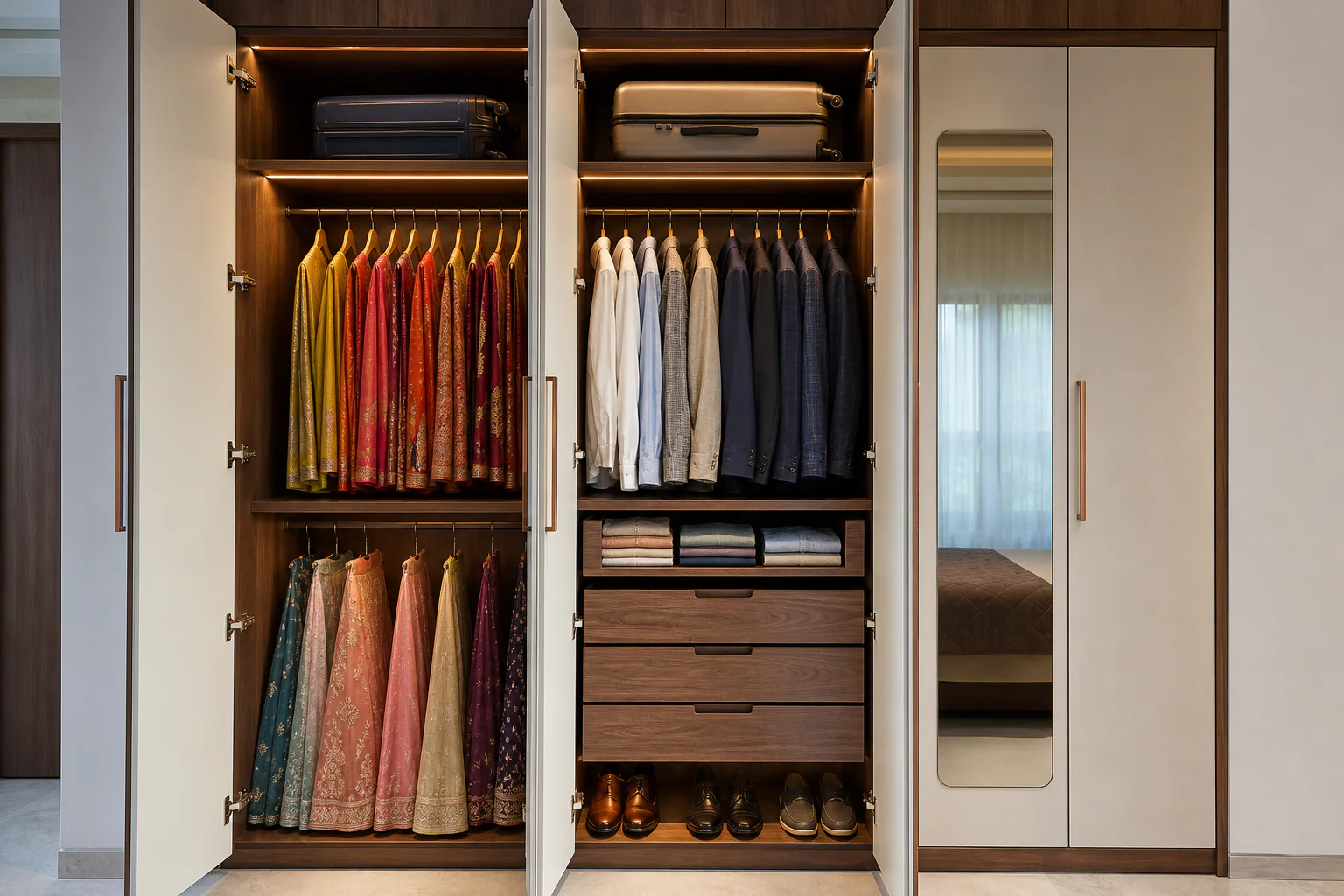
Lighting and ventilation are often discussed after the wardrobe is ready. That is too late. If you want sensor lights, profile LEDs or cleaner cable routes, those decisions should happen with the wardrobe design plan, not after installation.

Use lights where the wardrobe is actually dark

The most useful light is not decorative. It is placed where the user cannot see clearly: deep hanging sections, dark shelves, dressing zones and corners blocked by shutters. A soft LED profile under a shelf or a vertical strip near a hanging zone can be more useful than one bright light in the centre.

Sensor lights work best with clean wiring routes

Door sensors and motion sensors are useful when they are planned early. The carpenter can allow space for channels, drivers and access points. If this is added later, the wiring may become visible or the wardrobe may need avoidable cutting.

Ventilation is about preventing trapped air

A wardrobe against a damp wall will not be fixed by a small vent. First treat seepage, then plan cabinetry. For normal rooms, useful ventilation can come from sensible back gaps, shutter gaps, loft separation and avoiding over-sealed compartments that trap clothes for months.

Best places to consider wardrobe lighting

  • Long hanging section: vertical LED strip or top light for dresses, coats and suits.
  • Drawer zone: soft light near the drawer stack so daily items are easier to see.
  • Dressing mirror: warmer side lighting instead of one harsh top light.
  • Display shelves: profile light only if the section is meant to stay tidy.
  • Loft: usually not needed unless the loft is used often.
AlterCraft tip

If the wardrobe needs sensor lights, decide the driver location before production. A serviceable driver is better than a hidden driver that cannot be reached later.

Common mistakes

  • Adding lights after fabrication without cable planning.
  • Putting bright white light in a warm bedroom finish.
  • Ignoring wall dampness before installing a full-height wardrobe.
  • Using too many display lights in storage that will not stay visually clean.
  • Forgetting switch or sensor access during maintenance.

Link it with the internal layout

Lighting is useful only when the internal layout makes sense. First plan daily wear, hanging, drawers, shelves and lofts with the wardrobe internal layout guide. Then add light only where it improves use.

Plan Wardrobe Details Read Automation Ideas Check Wardrobe Cost

Related guides

Wardrobe hub Modular wardrobe design guide

Room measurement, dimensions, internals, door choice and cost planning.

Small bedroom Small bedroom wardrobe layout tips

Daily wear, drawers, loft and centre-access planning for compact rooms.