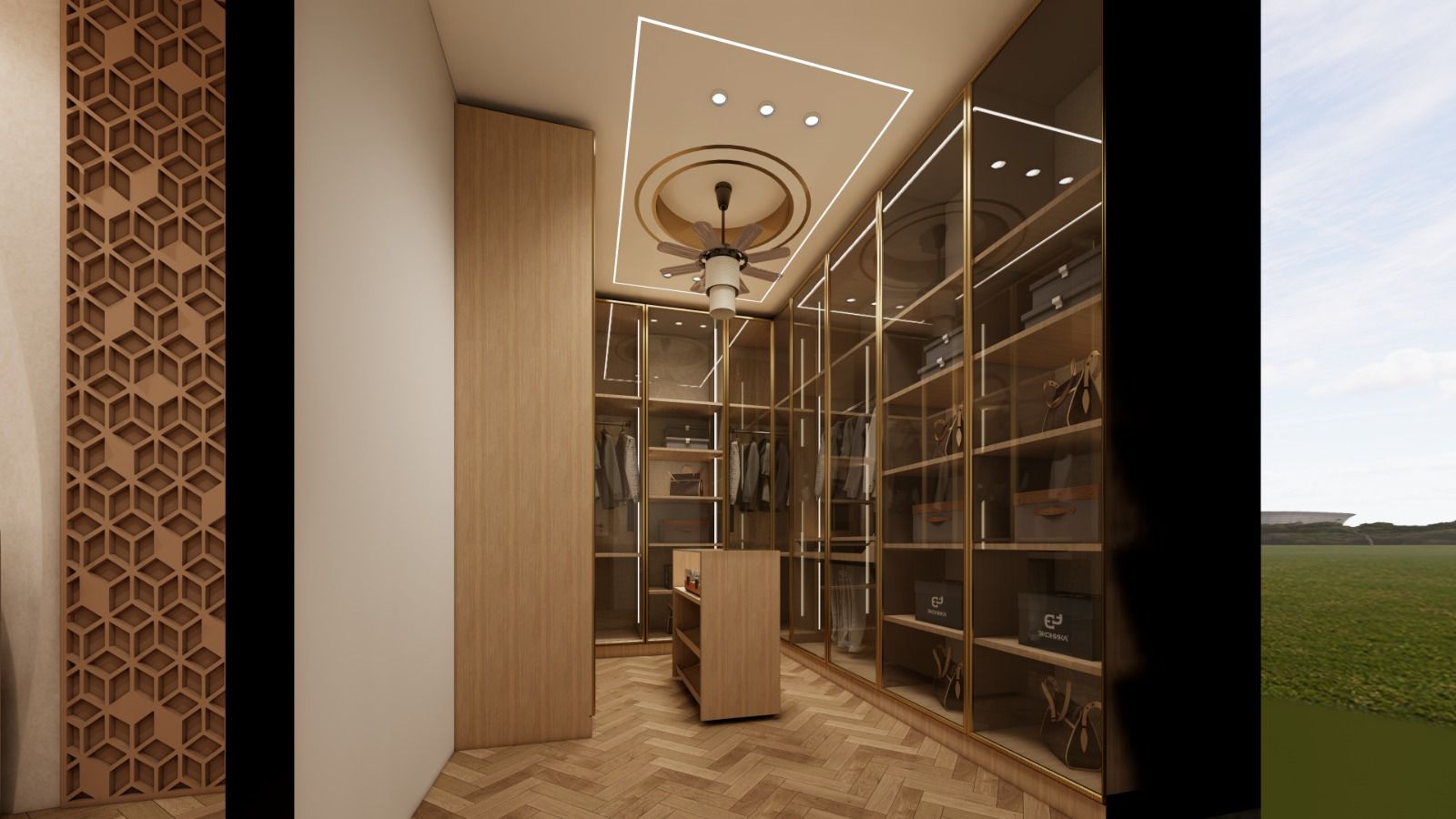
A small bedroom does not automatically need less storage. It needs smarter storage. The common mistake is filling the wardrobe with only shelves because shelves look simple on paper. In daily life, those shelves can become mixed piles of clothes, accessories, bags and items that no one wants to fold again.
The common mistake: only shelves
Only-shelf wardrobes are easy to draw, but they are not always easy to use. Folded clothes fall forward, small items disappear behind stacks and every shelf starts carrying mixed categories. After a few weeks, the inside begins to feel messy even if the outside shutters look clean.
A better layout starts with reach
Think of the wardrobe in three zones: easy reach, low reach and high reach. The easy reach area should hold daily-use clothes. The low area can hold heavier items or drawers. The high area should be reserved for low-use storage, not everyday clothing.
Keep daily wear in the centre
Daily-use shirts, trousers, kurtas, T-shirts and frequently used folded clothes should sit in the centre section where your hand reaches naturally. This keeps the wardrobe faster to use in the morning and easier to maintain through the week.
Drawers work better around waist height
Drawers are useful for innerwear, accessories, watches, belts, small clothing items and documents. When possible, keep them around waist height or lower-mid height. Very low drawers need bending every day, and very high drawers are hard to see inside.
Loft storage is for low-use items
The loft should not become a place for daily-use clothes. Use it for suitcases, blankets, seasonal wear, extra bedding and items you rarely need. This makes the main wardrobe area cleaner and reduces the number of times you need a stool or ladder.
Use hanging space, shelves and drawers together
- Use hanging space for clothes that crease easily or are used often.
- Use open shelves for folded daily wear and bags that need quick access.
- Use drawers for small items that become messy on shelves.
- Use lofts for low-use storage, not daily clothing.
- Keep heavy items low so the wardrobe stays easier to handle.
What to measure before finalising
Before choosing the internal layout, measure the wardrobe wall width, room depth, bed position, shutter opening space and any switchboards or beams. If the room is compact, sliding shutters may help with front clearance, while openable shutters are simpler and easier to service when space allows.
Keep daily wear in the centre, drawers around waist height, hanging on one side, folded clothes on the other side and loft storage above. This is an example idea, not a fixed measurement plan. The final layout should follow your actual room size and wardrobe wall size.
Quick reel version
The 30-second lesson is simple: most wardrobes waste space because the inside layout is wrong. Only shelves look simple, but they become messy fast. Keep daily wear in the centre, drawers around waist height and loft storage for suitcases, blankets and items you rarely use.
FAQ
What is a better wardrobe layout for a small bedroom?
A better layout keeps daily-use items in the easy-reach centre, uses drawers for small items, adds hanging space for crease-prone clothes and keeps loft storage for low-use items.
Are only shelves good for wardrobe storage?
Only shelves can work for very simple storage, but most families need a mix of shelves, hanging and drawers. This keeps clothing categories cleaner and easier to access.
Where should drawers be placed in a wardrobe?
Drawers are usually most comfortable around waist height or lower-mid height. The exact placement depends on wardrobe height, user height and the items being stored.
What should go in wardrobe loft storage?
Loft storage is best for suitcases, blankets, seasonal clothes, extra bedding and low-use items. Daily clothes should stay in the main easy-reach zone.