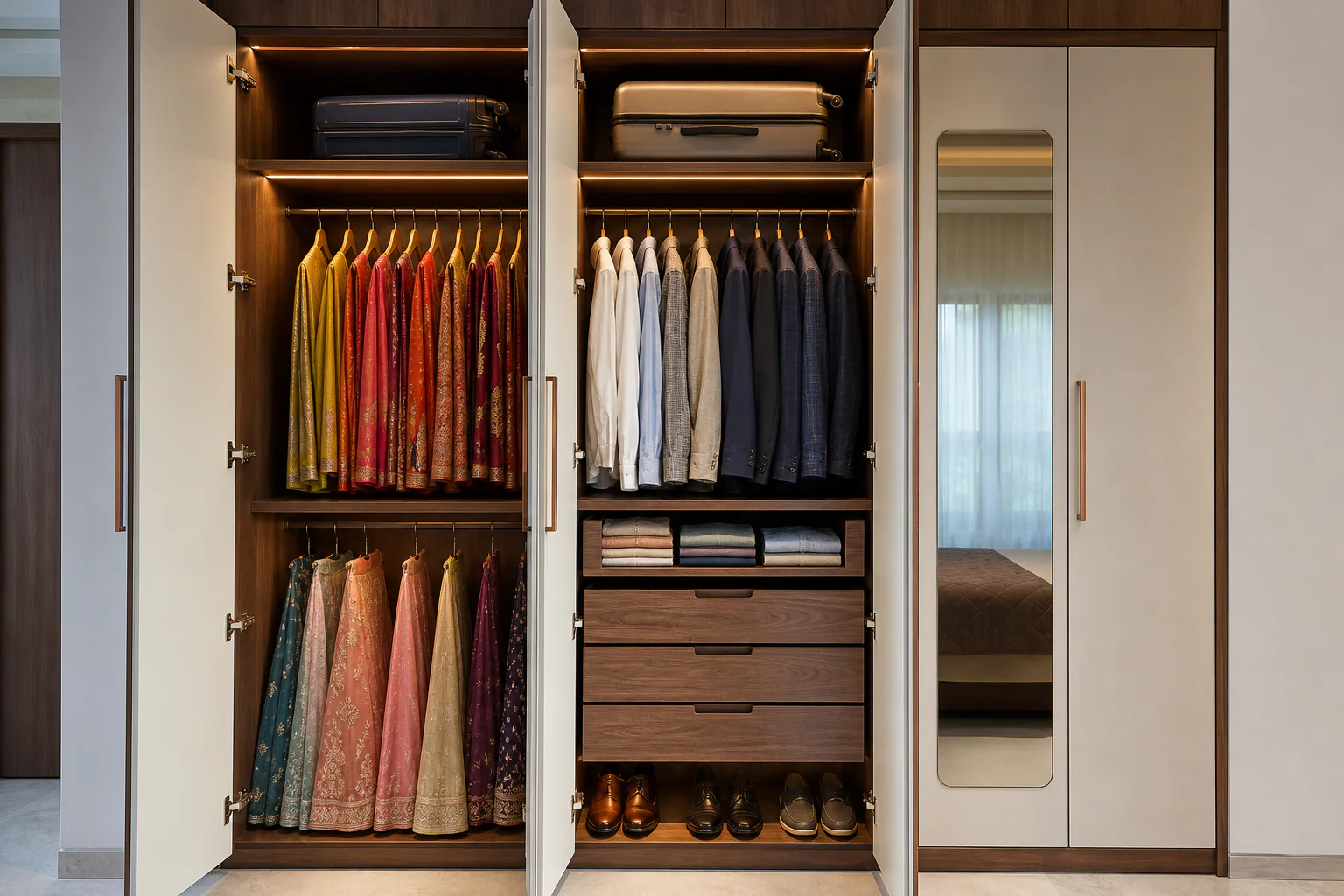
A wardrobe should not be planned as one tall box. It should be divided by how people use clothing every day. Daily wear should be easy to reach, small items should be in drawers and low-use items should move away from the main hand-reach zone.
Start with clothing categories
Before choosing shelves or drawers, list what the wardrobe must hold: shirts, trousers, dresses, sarees, suits, jackets, folded clothes, bags, innerwear, accessories, footwear, blankets and luggage. The internal layout should come from this inventory.
Hanging space
Hanging space is useful for clothes that wrinkle easily or need quick access. Short hanging works for shirts, trousers and daily wear. Longer hanging may be needed for dresses, coats, sherwanis or saree storage depending on the household.
Drawers
Drawers are best for smaller items: innerwear, belts, watches, jewellery trays, documents, accessories and items that become messy on shelves. If every small item is placed on open shelves, the wardrobe becomes harder to maintain.
Shelves
Shelves are useful for folded clothes, bags and daily stacks. Keep shelf depth and height practical. Very deep shelves hide items at the back, while very tall shelves create unstable piles.
Loft storage
Loft storage should hold suitcases, blankets, seasonal wear and extra bedding. It is not ideal for daily-use clothes because access is high and usually needs a stool. Treat the loft as low-use storage, not main storage.
A simple zoning rule
- Eye and hand level: daily-use clothes and frequently used shelves.
- Waist to lower-mid level: drawers, accessories and heavier folded items.
- Top level: loft storage and seasonal items.
- Side bay: hanging space for clothes that should not be folded.
- Lower bay: bags, shoes or heavy items if the wardrobe design allows it.
The best internal layout is not the one with the most shelves. It is the one where every category has a proper place: daily wear, hanging, drawers, folded clothes, bags and low-use loft storage.
Quick answer
A practical wardrobe internal layout combines hanging, shelves, drawers and lofts. Daily wear should be in the centre, drawers should be comfortable to reach and lofts should hold items used occasionally.