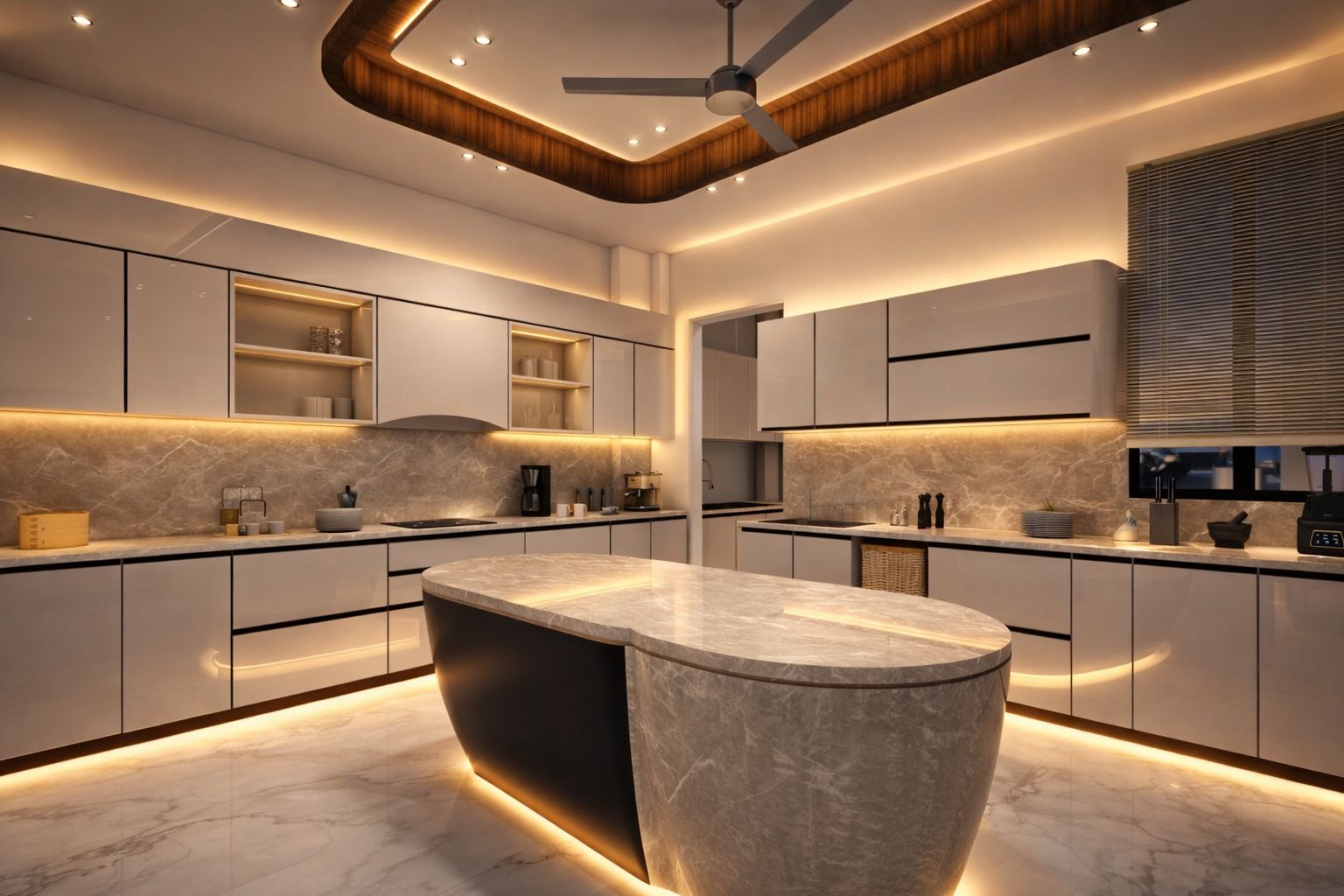
Smart interiors are not about adding gadgets everywhere. They are about placing small controls where they reduce friction: lights that turn on when needed, curtains that follow a routine, wardrobe lighting that helps at night and scenes that make rooms feel ready with one tap.
Start with lighting scenes
Lighting gives the biggest daily benefit. Plan separate circuits for ceiling lights, profile lights, task lights and decorative lights. Then create scenes such as cooking, dinner, movie, reading and night mode. Good scene planning can make a modest room feel much more premium.
Use sensors where hands are busy
- Wardrobe sensor lights for early morning or late night use
- Kitchen task lights under overhead cabinets
- Motion lighting in passages, stair areas and utility zones
- Door sensors for pantry or hidden storage sections
Plan curtain motors early
Motorized curtains need proper track planning, electrical points and enough ceiling or pelmet space. If the false ceiling or panel work is already finished, adding motors later can become messy. Decide early if the room needs remote, app or schedule-based curtain control.
Keep manual control available
A smart home should still work for guests, elders and family members who do not want an app for every action. Keep familiar switches, clear labels and backup controls. Automation feels premium when it disappears into normal use.
Before choosing automation devices, confirm wiring, neutral availability, Wi-Fi coverage and service access with an electrician or automation specialist.
Video idea
A strong video can show one living room moving through four lighting scenes. Add a simple floor-plan overlay so viewers understand which circuit changes the mood.