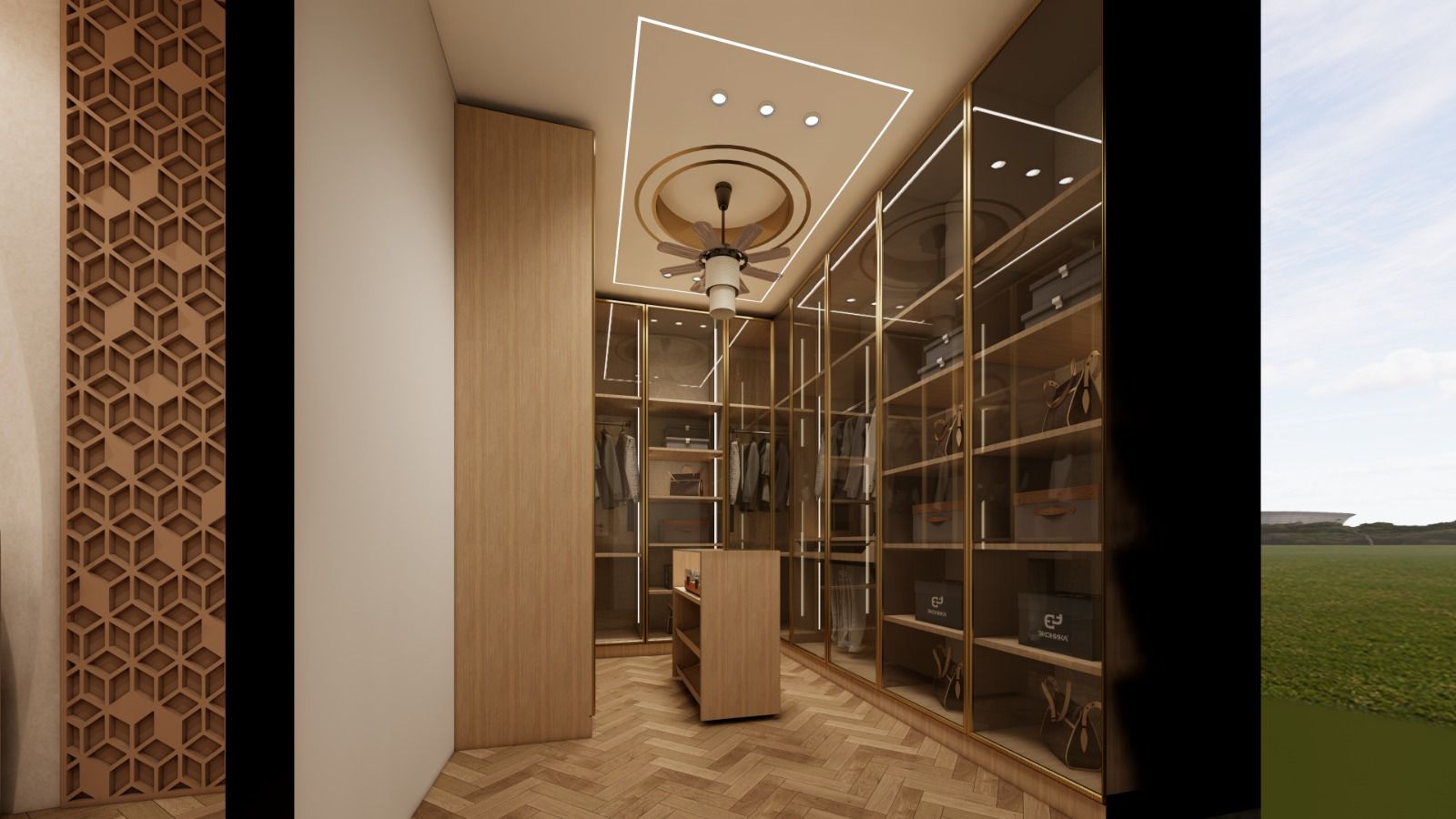
Most wardrobe problems come from planning too late. The finish may look good, but shelves are too deep, drawers hit the bed, hanging space is short or loft access is uncomfortable. Start with measurements and daily use before choosing the color.
Measure the room properly
Note wall width, ceiling height, skirting, switchboards, beams, window positions and door swing. Also measure the walking space in front of the wardrobe. Openable shutters need clearance; sliding shutters need a good track and enough width to access each bay.
Divide storage by real use
- Long hanging for dresses, coats or sherwanis
- Short hanging for shirts, trousers and daily wear
- Drawers for accessories, innerwear and small items
- Open shelves for folded clothes and bags
- Loft storage for suitcases, bedding and occasional items
Choose shutter type with the room in mind
Openable shutters are simple, easy to repair and give full access to each section. Sliding shutters save front clearance and look clean in tight rooms, but they need better hardware and regular track cleaning. Mirror shutters can make a room feel larger, but they should be placed where glare and reflection feel comfortable.
Think about lighting and ventilation
Sensor lights inside wardrobes are useful when the room light does not reach deep shelves. Ventilation gaps or breathable planning can help in humid spaces. Keep electrical access planned before fabrication, especially if you want profile lights, vanity lighting or smart sensors.
Before finalizing a wardrobe, write down what you own: daily wear, formal wear, bags, footwear, bedding and luggage. The best layout comes from your inventory, not from a showroom photo.
Video idea
A useful video can walk through a blank wall and show three wardrobe layouts for the same space: budget openable, premium sliding and a dressing-focused layout. Customers learn faster when they see tradeoffs on a real wall.