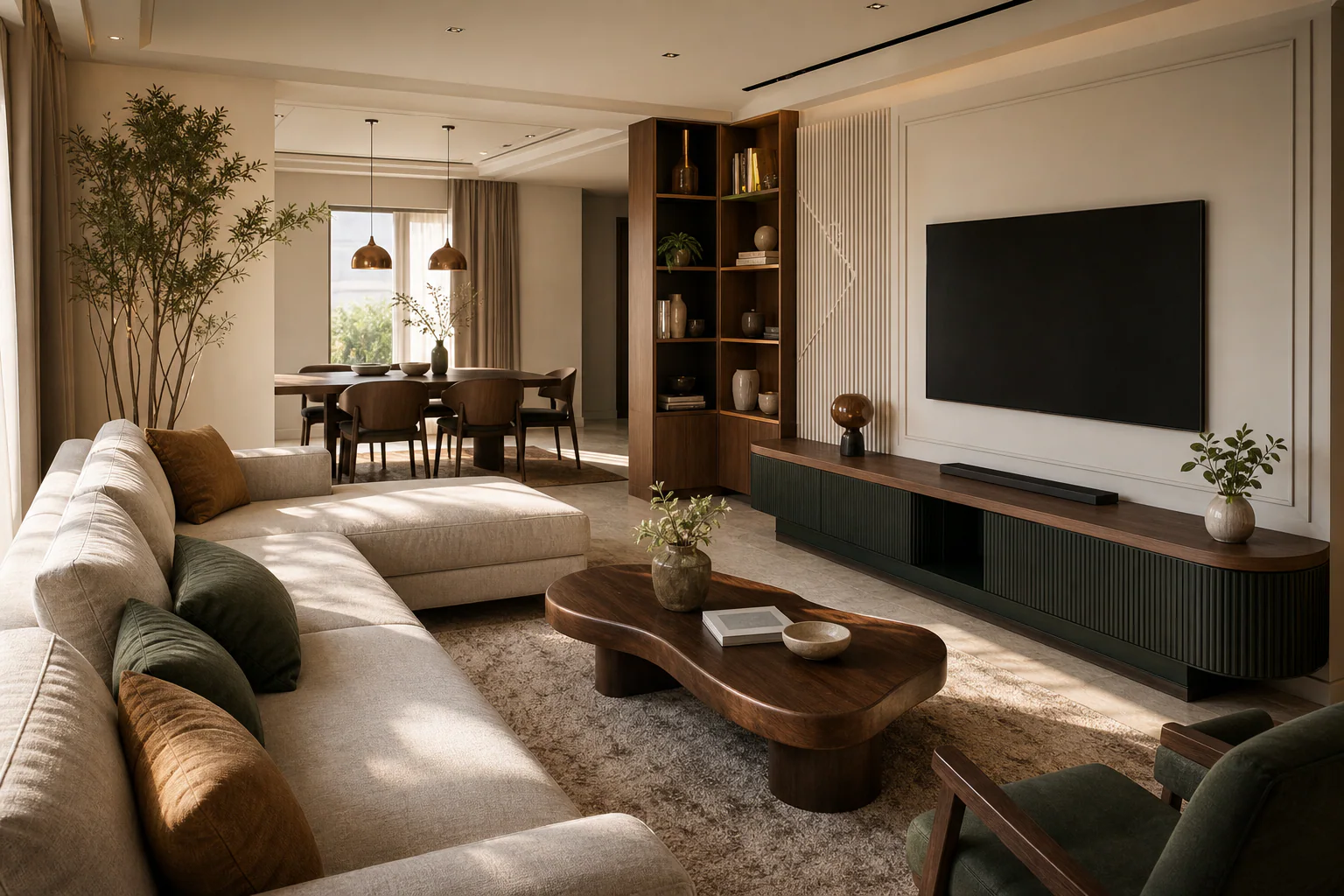
Living room furniture guide
Need this design for your home?
Get a free quotation on WhatsApp. Share photos, wall sizes, budget and location so AlterCraft can guide the next practical step.
Get free quotation on WhatsAppTV unit planning guide: measure before fabrication
A good TV unit is not only a decorative panel. It must manage cables, set-top boxes, speakers, ventilation, wall strength, service access and storage.
Need this design for your home?
Get a free quotation on WhatsApp. Share photos, wall sizes, budget and location so AlterCraft can guide the next practical step.
Get free quotation on WhatsAppChecklist before design
- TV size and viewing height from sofa.
- Power, HDMI, router and set-top box locations.
- Open shelves, drawers and closed storage needs.
- Panel depth and ventilation for devices.
- Lighting choice: profile light, backlight or no light.
CNC panels can add texture behind the TV, but leave access for wiring and future repairs.
Need this design for your home?
Get a free quotation on WhatsApp. Share photos, wall sizes, budget and location so AlterCraft can guide the next practical step.
Get free quotation on WhatsApp