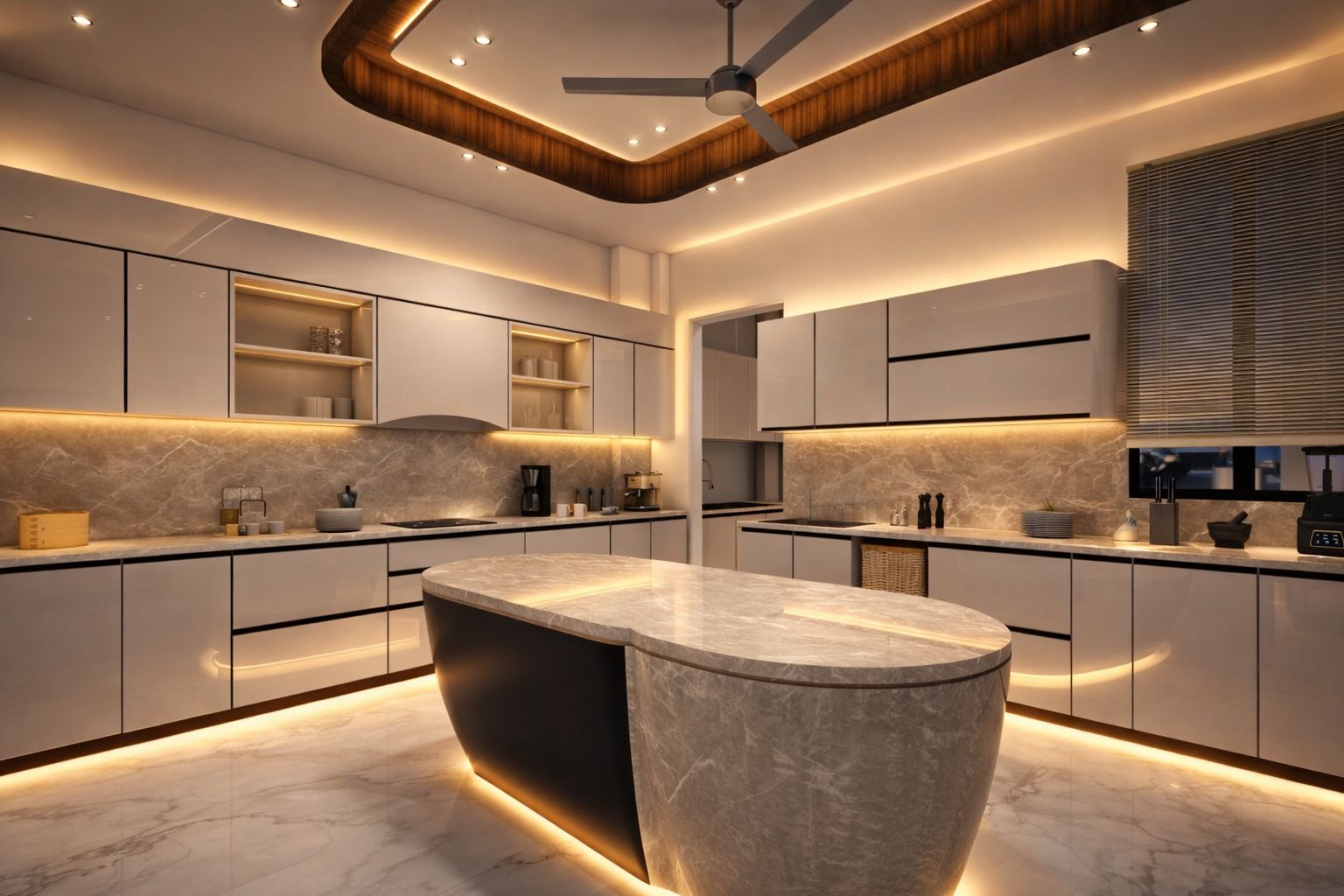
When people ask for modular kitchen cost, the honest answer starts with scope. A straight kitchen, L-shaped kitchen, U-shaped kitchen and island kitchen can all use the same finish, but the cabinet count, countertop area, hardware count and service work will be different. That is why two kitchens with the same size can still have different budgets.
Start with the layout
Layout affects both usability and cost. A straight kitchen is usually simpler. An L-shaped kitchen adds corner storage. A U-shaped kitchen gives more storage but needs careful movement planning. An island adds working area and visual value, but also increases countertop, electrical and installation planning.
Material and finish choices
The carcass material, shutter material and finish decide a large part of the budget. Laminate is practical and durable for daily use. Acrylic gives a glossy premium look. Veneer feels warmer and more natural but needs more care. High-use kitchens should prioritise durability before show value.
Hardware changes the feel
- Soft-close hinges and channels improve daily use and reduce noise.
- Tall units and pantry pull-outs add convenience but increase cost.
- Corner units are helpful, but only if the kitchen actually needs them.
- Lift-up shutters need better hardware and should be planned only where useful.
Countertop, dado and sink planning
Granite, quartz and other countertop choices change the total quickly. The dado tile, sink, hob, chimney and cut-outs should be discussed before finalising the quote. Small missed details at this stage can become site delays later.
What to keep ready before asking for a quote
- Wall-to-wall measurements and ceiling height
- Photos of the current kitchen or empty site
- Approximate appliance list: hob, chimney, oven, microwave, dishwasher, fridge
- Storage needs: groceries, utensils, tall bottles, gas cylinder, cleaning supplies
- Finish preference: laminate, acrylic, veneer, glass or mixed finish
Do not compare kitchen quotes only by final price. Compare board thickness, finish brand, hardware type, countertop scope, installation responsibility and after-sales support. A cheaper quote can become expensive if important items are missing.
Quick answers
The biggest cost drivers are cabinet quantity, hardware, finish, countertop and site conditions. A practical kitchen should first solve storage and workflow, then finish. Premium details are worth it where you touch and use them every day.
Video idea
A useful video can show the same kitchen wall in three budgets: practical laminate, premium acrylic and luxury mixed finish. Viewers immediately understand why cost changes without feeling confused by a long rate list.